Introduction
Humans have dreamed of slowing or reversing aging for millennia. Ancient myths and texts, from the Epic of Gilgamesh to Ponce de León’s quest for the Fountain of Youth, attest to the timeless human desire for rejuvenation. In the 21st century, research into aging biology has accelerated briskly, and investigators have begun to critically evaluate potential geroprotective drugs. A geroprotective agent (or geroprotector) is a therapeutic intervention—such as a small molecule, peptide, biologic, or dietary restriction mimetic—that targets the foundational molecular and cellular mechanisms of biological aging to slow, halt, or reverse the functional decline of an organism.
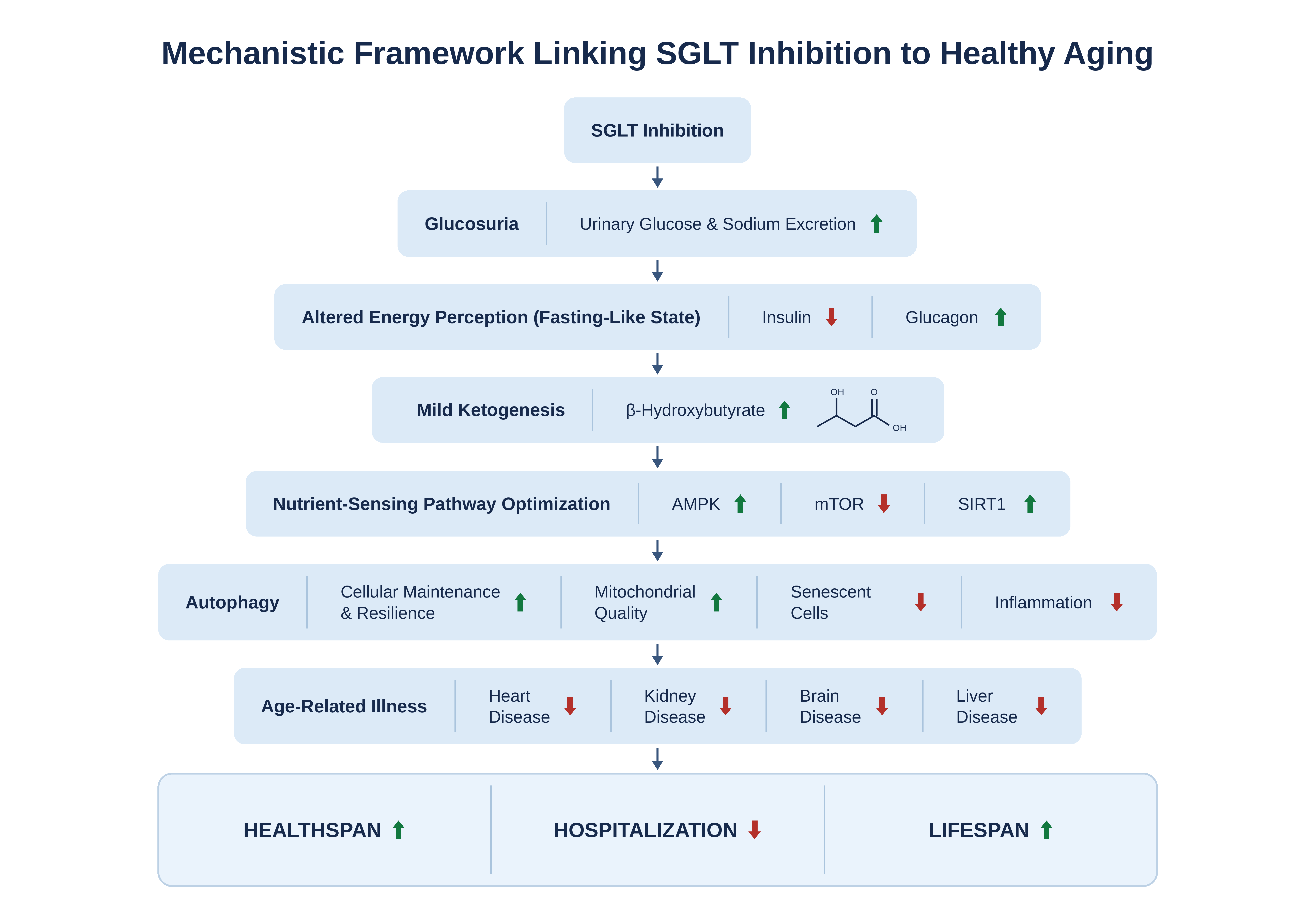
Unlike traditional reactive therapies that target isolated diseases, geroprotectors address the fundamental hallmarks of aging across multiple organ systems to simultaneously extend both lifespan and healthspan—the period of life spent free from chronic disease and disability. To achieve this, a candidate geroprotector must modulate conserved molecular pathways of aging—for instance, by inhibiting nutrient-sensing pathways such as mechanistic target of rapamycin (mTOR) or insulin-like growth factor 1 (IGF-1), attenuating cellular senescence, optimizing mitochondrial function, restoring epigenetic integrity, or upregulating AMP-activated protein kinase (AMPK) and autophagy (Figure 1).

The incidence of major conditions that impair healthspan and drive premature mortality—including atherosclerotic cardiovascular disease (ASCVD), heart failure (HF), chronic kidney disease (CKD), type 2 diabetes (T2D), malignancies, neurodegenerative disease, and frailty—increases sharply with age. While contemporary clinical practice focuses primarily on treating manifest disease, therapeutics that slow biological aging at a cellular level offer a novel paradigm: systematically mitigating the risk of multiorgan, age-related pathology before clinical manifestation.
The current discourse on pharmacologic geroprotection focuses primarily on rapamycin, metformin, and sodium-glucose cotransporter inhibitors (SGLTi) (Figure 2). While rapamycin and metformin possess mechanistic plausibility and preclinical evidence, human data confirming broad clinical longevity benefits remain limited and conflicting.1-4 Conversely, SGLTi have consistently demonstrated clinical benefits across a spectrum of age-related diseases in diverse patient populations in large randomized controlled trials (RCTs), meta-analyses, and real-world registries.5-23

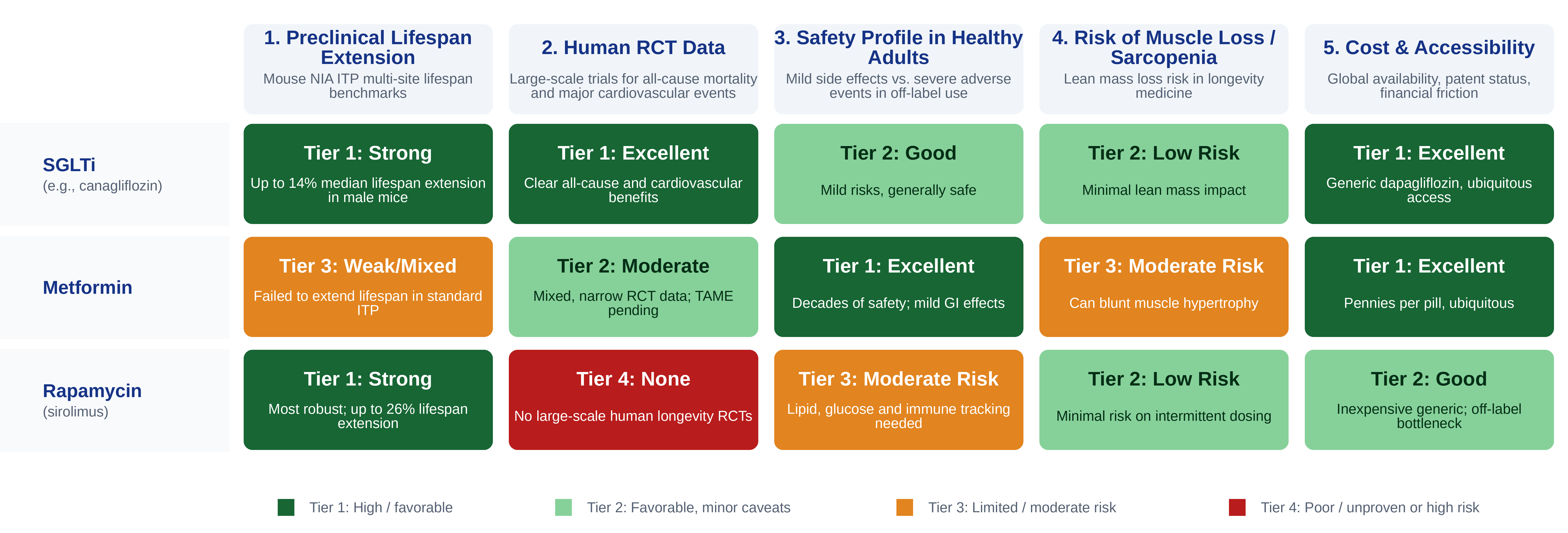
Although dedicated clinical trials have yet to evaluate SGLTi as primary longevity therapeutics in healthy middle-aged cohorts, the compelling convergence of hard clinical endpoints, mechanistic plausibility, and genetic data positions SGLTi as arguably the most promising candidate class for human geroprotection.5-24
Methods: Trial-Level Meta-Analyses and Modeled Cumulative Incidence Curves
We pooled published trial-level hazard ratios from the large placebo-controlled randomized SGLTi outcome trials cited in this review (Figures 3 and 4), grouped by enrolled population: T2D cardiovascular outcome trials (EMPA-REG OUTCOME, CANVAS Program, DECLARE-TIMI 58, VERTIS-CV, and SCORED), HF trials (DAPA-HF, EMPEROR-Reduced, EMPEROR-Preserved, DELIVER, and SOLOIST-WHF), and CKD trials (CREDENCE, DAPA-CKD, and EMPA-KIDNEY). Two endpoints were examined: death from any cause, reported by all 13 trials (90,413 patients), and first hospitalization from any cause, reported by 5 trials (EMPA-REG OUTCOME, CANVAS Program, DECLARE-TIMI 58, CREDENCE, and DAPA-CKD; 43,027 patients). For each trial, the published intention-to-treat hazard ratio (HR) and 95% confidence interval (CI) were extracted from the primary publication. Log-transformed hazard ratios were pooled using inverse-variance–weighted random-effects meta-analysis (DerSimonian–Laird estimator for τ²), with pooled estimates calculated within each population subgroup and overall. Between-trial heterogeneity was quantified with the I² statistic (with 95% CI), and 95% prediction intervals were calculated for the overall pooled estimates using the method of Higgins, Thompson, and Spiegelhalter. All pooling and projection computations were performed by the authors in R version 4.3.3 (R Foundation for Statistical Computing, Vienna, Austria); the analysis script is available from the corresponding author on request.

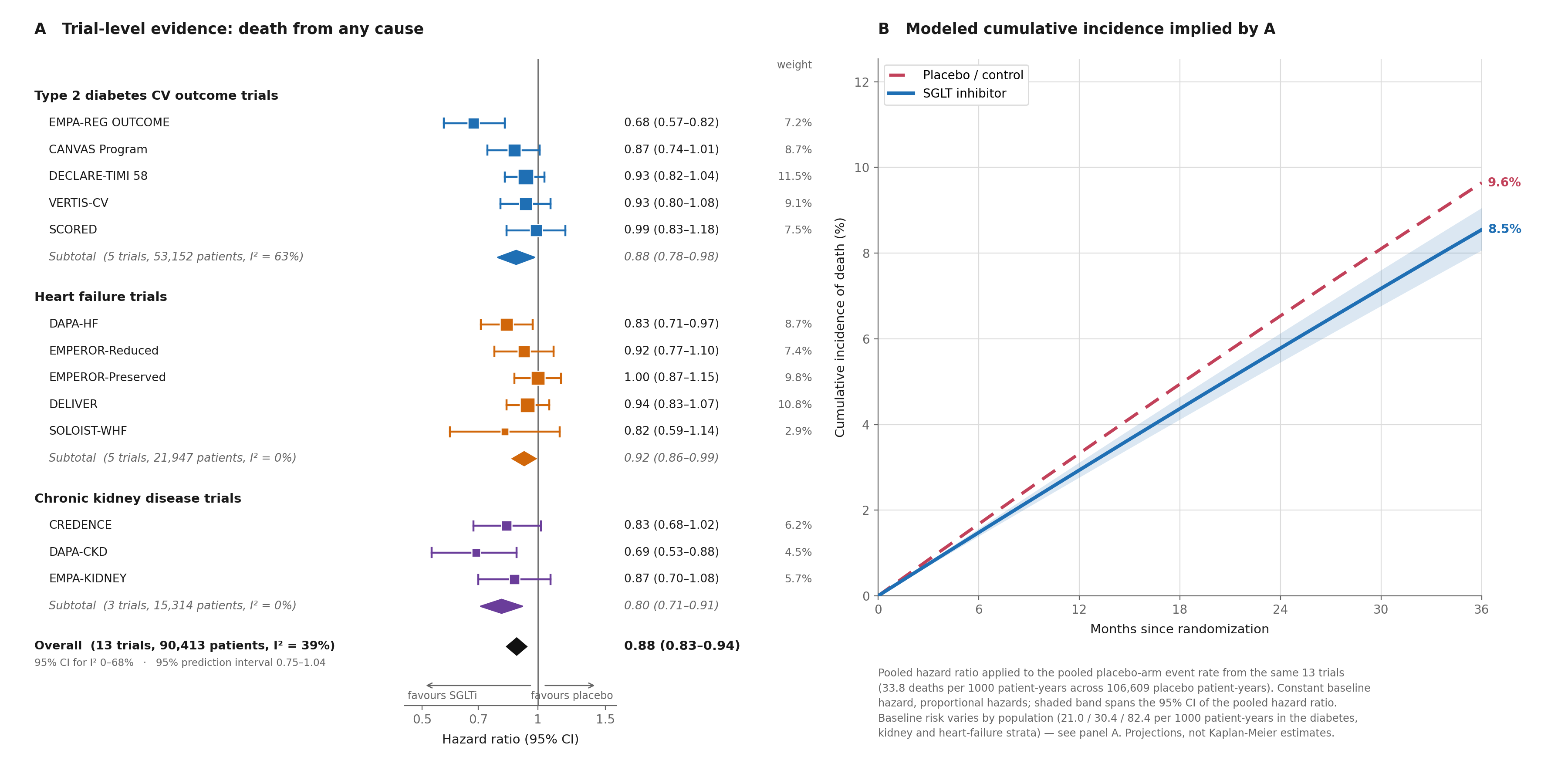

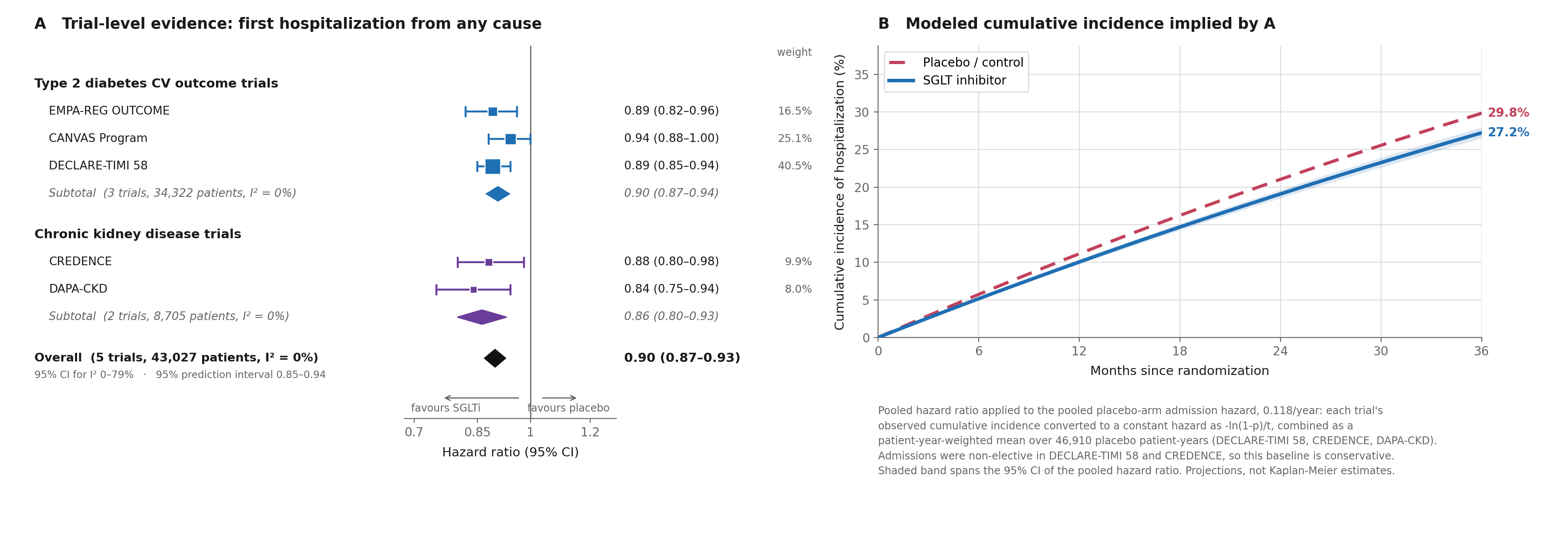
The panel B curves in Figures 3 and 4 are illustrative, model-based projections based on study-level data rather than analyses of patient-level data. For each endpoint, the overall pooled hazard ratio from panel A was applied to a pooled control-arm event rate abstracted from the same trials. The control-arm cumulative event probability was modeled as an exponential function of time — that is, a constant baseline hazard — and the treatment-arm curve was derived as ST(t) = SC(t)HR under the proportional hazards assumption; the shaded bands span the 95% CI of the pooled hazard ratio applied to the same baseline. For all-cause mortality, the baseline hazard was the pooled placebo-arm mortality rate across the 13 contributing trials (33.8 deaths per 1,000 patient-years over 106,609 placebo patient-years); baseline mortality varied substantially by population (21.0, 30.4, and 82.4 deaths per 1,000 patient-years in the diabetes, kidney disease, and heart failure strata, respectively). For all-cause hospitalization, the baseline hazard was derived from placebo-arm admission rates in the contributing trials reporting them (3,036/8,578 patients over 4.2 years in DECLARE-TIMI 58, 809/2,199 over 2.6 years in CREDENCE, and 658/2,152 over 2.4 years in DAPA-CKD). Each trial’s observed cumulative incidence was converted to a constant hazard as λ = −ln(1 − p)/t, and these were combined as a patient-year-weighted mean across 46,910 placebo patient-years, giving a pooled hazard of 0.118 per year. This hazard-scale approach reproduces each trial’s observed cumulative incidence at its own follow-up time, whereas a crude events-per-patient-year rate would understate it because patients cease to be at risk after a first admission. Admissions were non-elective in DECLARE-TIMI 58 and CREDENCE, so the pooled baseline is a conservative estimate of all-cause admission risk. Trial-level inputs, endpoint definitions, and data sources for both figures are given in Supplementary Tables S3 and S4. No individual event times, censoring, or number-at-risk data were used. These projections are intended solely to visualize the absolute risk differences and time course implied by the pooled summary estimates; they should not be interpreted as empirical Kaplan-Meier survival curves. The pooled estimates and modeled curves were computed by the authors in R as described above; artificial intelligence tools were used only to render the figures from these author-specified outputs, and every figure was checked against the underlying values by the authors.
Origin and Function of SGLT Membrane Proteins
Sodium-glucose cotransporters are transmembrane proteins that leverage the extracellular sodium gradient to facilitate glucose transport across cell membranes. SGLT2 is expressed primarily in the proximal renal tubule, where it mediates most of the filtered glucose reabsorption, whereas SGLT1 is predominantly expressed in the brush border of the small intestine to facilitate dietary glucose absorption. The SGLT family of sodium-coupled nutrient transporters emerged early in metazoan evolution hundreds of millions of years ago, serving as highly conserved architecture for nutrient acquisition and systemic energy homeostasis.25-28
Pharmacologic inhibition of this ancient nutrient-sensing pathway with SGLTi simulates a fasting state and activates conserved cellular resilience mechanisms.25 SGLT inhibition does not block a classical signaling receptor; rather, it directly alters substrate transport, shifting the organism’s perceived energy state.26 By inducing glucosuria, mild natriuresis, lower insulin levels, higher glucagon levels, and modest ketogenesis, SGLTi replicate aspects of fasting/starvation physiology despite ongoing caloric intake.29-32 This induced nutrient-deprivation signaling secondarily upregulates autophagy—an essential cytoprotective pathway enabling cells to recycle damaged components, conserve energy, and survive environmental stress.25-27
Clinically, available SGLTi vary in their transporter selectivity. Agents such as empagliflozin and dapagliflozin selectively inhibit SGLT2 to drive glucosuria and natriuresis. Dual inhibitors like sotagliflozin, and to a lesser extent canagliflozin, also inhibit SGLT1, modulating both intestinal glucose absorption and renal reabsorption.
Anti-Aging Mechanisms of Action
The biologic plausibility of SGLTi as a geroprotector is rooted in their multiorgan metabolic and cellular effects (Figure 1). Beyond glycemic control, these agents reduce visceral adiposity, lower systemic blood pressure, decrease serum uric acid, elevate circulating ketones, dampen chronic inflammation, and improve cardiorenal energetics.29-36 At the cellular level, a primary mechanism driving these benefits is the activation of nutrient-deprivation signaling cascades.
By inducing glucosuria and altering systemic energy expenditure, SGLTi cause a transient cellular ATP deficit and a shift toward fatty acid oxidation. This energetic stress effectively simulates a restricted-energy state and enhances autophagic flux—a critical cytoprotective process that optimizes cellular housekeeping by clearing proteotoxic debris and eliminating dysfunctional mitochondria while simultaneously stimulating mitochondrial biogenesis.27
Consequently, SGLTi shift cellular machinery away from growth and proliferation toward pathways favoring maintenance and repair. Experimental models demonstrate that this drug class upregulates AMPK and suppresses maladaptive mTOR activity.27,28,34-37 This energetic shift activates sirtuin-1 (SIRT1), a nicotinamide adenine dinucleotide (NAD⁺)-dependent deacetylase that plays a pivotal role in cellular stress resistance, metabolic efficiency, and longevity. Crucially, this interlocking AMPK/SIRT1/mTOR network creates a self-reinforcing feedback loop that closely mirrors the downstream biochemistry achieved via fasting, caloric restriction, and physical exercise—suppressing the metabolic drivers of chronic inflammation, enhancing cellular stress resistance, metabolic efficiency, mitochondrial biogenesis, and autophagy.27
Emerging evidence suggests these effects ultimately culminate in the modulation of cellular senescence. Recent in vivo data demonstrate that SGLTi significantly attenuate senescent cell burden, thereby reversing pathological phenotypes of aging.38 Nevertheless, while these signaling axes and anti-senescence effects are compelling, they currently represent preclinical and translational markers rather than validated clinical mechanisms of aging modification in humans.
Ketones as Signaling Molecules
By inducing an energy-restricted metabolic state, SGLTi alter the systemic neurohormonal environment. Sustained urinary glucose excretion of approximately 60–80 g/day (roughly 240–320 kcal/day) modestly lowers circulating insulin and elevates glucagon, thereby stimulating lipolysis, hepatic fatty acid oxidation, and ketogenesis.29-32 In individuals without diabetes, baseline plasma levels of ketones—principally β-hydroxybutyrate (BHB)—are typically negligible (~0.1 mmol/L) but rise modestly with SGLTi to a stable physiological range (~0.3–0.6 mmol/L).29-32 Ketone levels remain well below the pathological threshold for diabetic ketoacidosis, in which BHB routinely exceeds 3.0–5.0 mmol/L.
Crucially, BHB functions not only as an alternative fuel source to glucose, but also as a potent signaling molecule. At these physiologic concentrations, BHB inhibits class I histone deacetylases, reduces oxidative stress, suppresses NLRP3 inflammasome activation, and upregulates cellular stress-resistance pathways.29-32,39-41 This dual functioning directly contributes to the rapid cardiorenal benefits observed clinically. The aging or failing myocardium—often characterized by metabolic inflexibility and mitochondrial dysfunction—benefits immediately from reduced congestion and wall stress, and the utilization of ketones as a highly energetic, oxygen-efficient fuel source.30-32,39-41
Clinical Evidence of SGLTi Geroprotection
Unlike most proposed longevity therapies, SGLTi are not speculative compounds or supplements supported primarily by preclinical animal models. They are established, once-daily prescription therapeutics with a comprehensive foundation of RCT evidence, and over a decade of clinical use in millions of patients with established disease.25 Even so, none of the RCTs have been done using SGLTi as a geroprotector therapy in healthy middle-aged people.
The clinical efficacy of the SGLTi class was initially established in large-scale cardiovascular outcomes trials of patients with T2D. In the EMPA-REG OUTCOME trial,5 empagliflozin significantly reduced cardiovascular mortality, HF hospitalization, and all-cause mortality in patients with T2D and established cardiovascular disease. Subsequent trials, including the CANVAS Program6 with canagliflozin and DECLARE-TIMI 587 with dapagliflozin, confirmed cardiorenal protection and reductions in HF hospitalization across diverse diabetic cohorts with or at risk for ASCVD.
The therapeutic scope of SGLTi rapidly expanded from diabetes management to dedicated organ-protection indications. In patients with T2D and established nephropathy, the CREDENCE trial demonstrated that canagliflozin significantly reduced the risk of kidney failure and cardiovascular events.9 Concurrently, dedicated HF programs showed that SGLTi revolutionized management across the entire spectrum of left ventricular ejection fraction. The DAPA-HF and EMPEROR-Reduced trials demonstrated substantial clinical benefits in HF with reduced ejection fraction,10,11 while the EMPEROR-Preserved and DELIVER trials extended these outcome benefits to patients with preserved or mildly reduced ejection fraction.12,13 Crucially, these benefits in HF were conferred regardless of baseline diabetes status. Similarly, the DAPA-CKD and EMPA-KIDNEY trials demonstrated profound renal and cardiovascular protection in patients with CKD, establishing that these benefits persist in a high proportion of patients without T2D.14,15
Dual SGLT1/SGLT2 inhibition has also demonstrated clear efficacy. Despite premature termination due to loss of funding, the SOLOIST-WHF and SCORED trials showed that sotagliflozin significantly reduced cardiovascular events in patients with T2D and either worsening HF or CKD, respectively.16,17
Metabolic dysfunction-associated steatotic liver disease (MASLD) has emerged as a pervasive chronic disease of aging, affecting roughly one-third of adults globally42 and serving as an indicator and potent driver of systemic inflammation, metabolic dysfunction, heightened cardiovascular risk, progressive liver disease, and reduced healthspan.18 Evolving evidence, including recent placebo-controlled RCT data, indicates that the systemic metabolic actions of SGLTi reduce hepatic steatosis, mitigate inflammation, and attenuate liver fibrosis in patients with MASLD.18
Meta-analyses confirm the remarkable consistency of the SGLTi class; a systematic review of 50 randomized trials spanning diabetes, HF, CKD, and acute cardiac decompensation found a consistent reduction in all-cause mortality beyond one year (relative risk 0.89, 95% CI 0.85–0.94).22 Across diverse populations, SGLTi reliably lower HF hospitalization by 25 to 35%.10-13,23 Among patients with CKD, SGLTi reduce CKD progression by approximately 37%, and significantly decrease the composite of cardiovascular death or HF hospitalization, irrespective of diabetes status.19-21 Cumulative incidence curves for all-cause mortality and all-cause hospitalization modeled by applying pooled class-wide hazard ratios to pooled control-arm event rates from the placebo-controlled SGLTi outcome trials show reductions in both all-cause mortality (Figure 3) and all-cause hospitalization (Figure 4). Because the risks for both hospitalization and death rise exponentially with advancing chronological age, particularly after age 50, a drug that slows aging at a cellular level and across multiple organ systems would be expected to reduce risk for both endpoints.
The overall survival and hospitalization curves in these trials are striking because the clinical benefits appear rapidly—within weeks to a few months of randomization in the dedicated HF trials10-13,16—and are observed across diverse populations with various age-related diseases. Importantly, these clinical benefits are conferred equally in diabetic and nondiabetic cohorts and are not explainable through changes in HbA1c or traditional cardiovascular risk factors, pointing toward underlying cellular and systemic resilience mechanisms.
Observational Signals: Dementia, Atrial Fibrillation, Gout, Steatotic Liver Disease, and Cancer
Beyond RCT endpoints, observational data suggest that SGLTi may be associated with lower risks of neurodegenerative diseases,43-45 atrial fibrillation and ventricular arrhythmias,46 hyperuricemia and gout,47 and hepatic steatosis,18 and improved survival in cancer patients48 and frail older adults.49 While these signals are promising, they must be interpreted cautiously as hypothesis-generating. Nevertheless, given that SGLTi systematically upregulate autophagy, attenuate cellular senescence, and optimize mitochondrial energetics, their apparent capacity to reduce the incidence of highly divergent, age-related pathologies is biologically consistent with a true geroprotective mechanism.34-38
The potential neuroprotective signal is particularly notable. One nested case-control study and a large-scale, propensity-matched observational cohort have reported a significantly lower incidence of dementia among SGLTi users compared to those prescribed alternative glucose-lowering therapies.43,44 However, meta-analyses of dedicated cardiovascular RCTs have failed to demonstrate a concordant, statistically significant neuroprotective effect.45 This discrepancy highlights the critical need for prospective, targeted trials designed to evaluate SGLTi as primary preventive therapies against neurodegenerative disease.
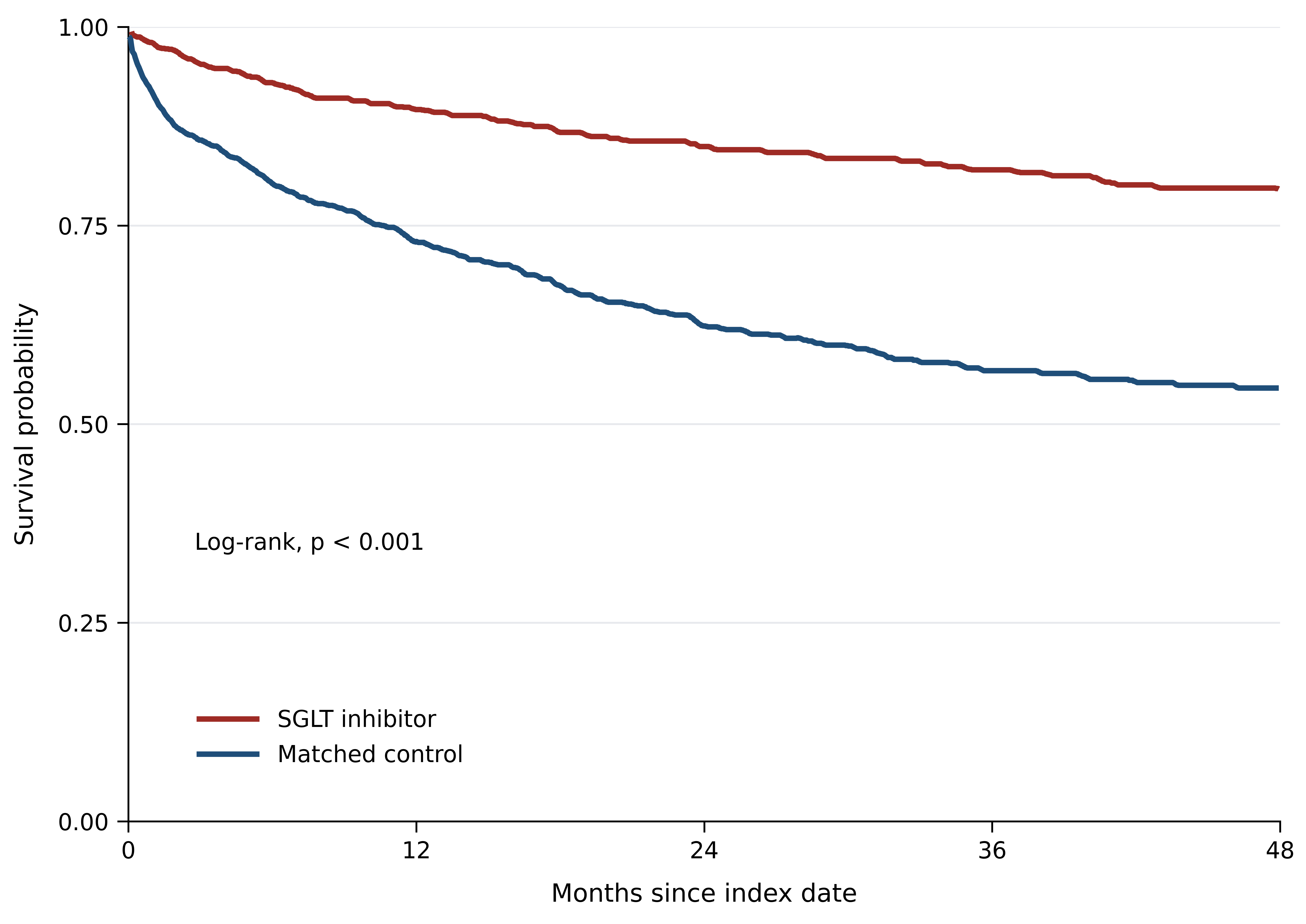
Sodium-glucose cotransporters have also become a target of interest in oncologic investigations. SGLT expression is upregulated in various malignancies—including adenocarcinomas of the breast, pancreas, kidney, and prostate—to fuel the high metabolic demands of unchecked neoplastic growth.50,51 Preclinical studies show SGLT blockade disrupts these glycolytic pathways and impedes cancer cell growth.50 Clinically, a long-term observational study of patients with T2D and comorbid malignancies demonstrated that SGLTi therapy was independently associated with significantly improved overall survival compared to matched controls48 (Figure 5). This potential antineoplastic activity could be due to a combination of reductions in mitogenic insulin levels systemically and direct metabolic restriction within the tumor microenvironment.48,50-52

Genetic Evidence
Naturally occurring loss-of-function variants in SLC5A2, the gene encoding SGLT2, cause benign familial renal glucosuria and partially mimic lifelong pharmacologic SGLT2 inhibition. A 2023 Mendelian randomization study leveraging this phenomenon suggested that genetically proxied SGLT2 inhibition was associated with significant reductions in cardiovascular risk and all-cause mortality.24 Specifically, this genetic proxy for SGLT2 inhibition was linked to 31% lower risk of HF, 21% lower risk of myocardial infarction, 16% lower risk of ischemic heart disease, and 22% lower risk of all-cause mortality.24 Only a minor fraction of the survival and cardioprotective benefits could be attributable to changes in circulating plasma glucose levels, providing genetic evidence that long-term SGLTi may confer systemic, cross-organ geroprotection through glucose-independent mechanisms. A separate Mendelian randomization analysis reached a parallel conclusion for lipids: genetically proxied SGLT2 inhibition lowered total, LDL, and non-HDL cholesterol, yet these lipid changes mediated only a small fraction of the reduction in cardiovascular risk.53
Parallel Mendelian randomization analyses have explored the long-term oncological effects of this pathway. Evaluating cancer risk using genetic proxies for SGLT inhibition, one such analysis suggested an association between SGLT downregulation and a decreased risk of bronchial and other lung malignancies.52
Safety of SGLTi
Any candidate geroprotector drug intended for long-term use in large numbers of relatively healthy people must possess an exceptional safety profile. Overall, SGLTi have demonstrated excellent tolerability in large RCTs, with adverse-event discontinuation rates generally comparable to placebo.5-17,54
The most common clinically relevant adverse effect is genital mycotic infection, occurring in approximately 6% of women and 2% of men, with higher incidence observed among individuals with obesity, uncontrolled T2D, or prior genital infections.5-17,54 These infections are typically mild, easily treatable, and often preventable through targeted hygiene counseling.
Fournier’s gangrene of the perineum is a rare but serious necrotizing fasciitis that has been reported in post-marketing surveillance.55,56 However, meta-analyses of RCTs have not shown an increased risk compared to placebo, and absolute event rates remain extremely low.55,56
Euglycemic ketoacidosis is another uncommon complication that primarily occurs during periods of acute metabolic stress, particularly in those with insulin-deficient diabetes, severe illness, prolonged fasting, heavy alcohol intake, very-low-carbohydrate diets, or perioperative stress.5-17,57 Patients should be counseled to hold SGLTi during severe illness, prolonged fasting, and before major surgery.
An elevated risk of lower extremity amputation was initially observed with canagliflozin in the CANVAS Program,6 though this signal has not been observed with other agents in this class.58 Canagliflozin also raised concern for possible excess fracture risk in the CANVAS Program (HR 1.26, 95% CI 1.04–1.52), but the excess was confined to one of the two early trials and was not reproduced in CREDENCE or in large real-world cohorts. Reassuringly, class-level analyses show no excess fracture risk with SGLTi.6,59,60
Practical Considerations
Currently available SGLTi in the United States include dapagliflozin, empagliflozin, canagliflozin, sotagliflozin, bexagliflozin, and ertugliflozin. Among these, dapagliflozin and empagliflozin are the two most widely prescribed agents and possess the most extensive and consistent RCT evidence supporting reductions in HF hospitalization, CKD progression, and cardiovascular mortality.5,7,10-15
The standard dose is 10 mg daily for both dapagliflozin and empagliflozin, requiring no routine titration or dose adjustment for cardiorenal indications. Notably, the higher dose of empagliflozin historically utilized for glycemic control in T2D is not necessary to achieve the cardiorenal or potential geroprotective benefits.
Sotagliflozin exerts broad SGLT1/SGLT2 inhibition and has demonstrated promising benefits in HF and diabetes, though its RCTs were terminated early because of a loss of funding.16,17 Bexagliflozin and ertugliflozin are newer and less extensively studied SGLTi with more limited outcomes evidence. Use of canagliflozin has been more limited due to distinct adverse event signals not observed with other SGLTi.
Until recently, prohibitive out-of-pocket cost was the major barrier to broader SGLTi use, with branded agents typically exceeding several hundred dollars per month in the United States. However, the recent introduction of generic marketplace competition for dapagliflozin has resulted in cash-pay prices for a 90-day supply of approximately $25 to $55.
Limitations
Several limitations temper the geroprotective hypothesis advanced here. The randomized evidence was generated in cohorts with manifest T2D, ASCVD, HF, or CKD rather than in the healthy, low-risk middle-aged adults in whom a geroprotector would ideally be used. In such a population, the number needed to treat for primary prevention would likely be considerably higher. The safety threshold is also higher: an adverse-event profile readily accepted in patients with HF or CKD, including genital mycotic infection and rare euglycemic ketoacidosis, warrants closer scrutiny when the recipients are well.
The proposed mechanisms—AMPK and sirtuin activation, enhanced autophagic flux, and mTOR inhibition resulting in reduced senescent-cell burden—derive largely from rodent and cell-culture models rather than from trials demonstrating that SGLTi alter a validated marker of human biological aging. The observational signals are susceptible to confounding by indication, healthy-user effects, comparator selection, and differential surveillance, and the neuroprotective signal has not been reproduced in meta-analyses of randomized trials.45 Finally, Mendelian randomization models lifelong partial inhibition beginning in utero, an exposure fundamentally different from therapy initiated in middle age.
Conclusion
Among candidate geroprotectors, SGLTi occupy a unique position. The arguments for metformin and rapamycin rest largely on animal models and surrogate biomarkers. SGLTi have instead produced reproducible reductions in hospitalization, CKD progression, cardiovascular death, and all-cause mortality in long-term RCTs enrolling more than 90,000 participants. While strong biological plausibility and mechanistic studies provide a coherent rationale, it is the breadth, consistency, and duration of the human RCT outcome evidence that most strongly supports this hypothesis.
No randomized trial has tested whether SGLTi extend healthspan or lifespan in healthy, low-risk middle-aged adults, and none has used functional decline or a validated biological-aging endpoint. Yet, for patients already exhibiting subclinical or overt cardiometabolic risk, including visceral adiposity, hypertension, prediabetes, T2D, dyslipidemia, ASCVD, or albuminuria, the randomized evidence provides solid rationale for SGLTi therapy independent of any age-slowing claim. Whether established cardiorenal benefit translates into measurable geroprotection is a question that future trials must resolve.