
Introduction
Acute heart failure (AHF) is a common cause of hospital admissions and patient morbidity and mortality, propelled by the increasing incidence of heart failure.1 Intravenous (IV) sodium nitroprusside (SNP) addresses AHF by mitigating preload and afterload, thereby enhancing cardiac output. Invasive hemodynamic monitoring during SNP administration is recommended, therefore intensive care unit (ICU) admission is typically required.2 Additionally, cyanide and thiocyanate toxicity are of concern with long term or high dose administration and concomitant kidney or hepatic dysfunction. Transitioning to oral (PO) vasodilators is necessary for long-term management and de-escalation of care from an ICU.3-5
There is limited evidence regarding the most effective way to transition from SNP to PO vasodilators. Previous studies have evaluated protocol-guided, rapid titration of PO vasodilators utilizing hydralazine-isosorbide dinitrate (H-ISDN) or captopril.4,5 These studies suggested that rapid titration protocols are effective in transitioning to PO vasodilators, though may contribute to increased hypotensive events and lower rates of guideline-directed medical therapy (GDMT) at discharge. It is unclear if provider-directed, non-protocolized transition strategies are more advantageous in terms of short-term safety, efficacy, and discharge GDMT rates. Given these uncertainties, we sought to compare a protocol-guided versus provider-directed transition approach among patients with AHF requiring pulmonary artery catheter-guided (PAC) therapy, to determine whether a protocolized strategy could achieve comparable outcomes and potentially support broader adoption of other PO vasodilator protocols.
Methods
Study design and study population
This was a retrospective, multi-center, single health system cohort study. Adult patients were included if they were hospitalized for AHF with reduced ejection fraction managed with PAC hemodynamic monitoring and transitioned from SNP to PO vasodilator therapy between January 1st, 2018 to April 1st, 2024. Patients were excluded if they had a history of congenital heart disease, were initiated on PO vasodilators after SNP was discontinued, crossed over between PO vasodilator strategies during the infusion, or underwent major cardiac intervention or surgery during hospitalization, including heart transplantation, valvular procedures, durable left ventricular assist device, or transitioned to mechanical circulatory support (MCS). Patients were stratified into two groups based on the PO vasodilator strategy used to transition off SNP. Oral vasodilators were defined as angiotensin-converting enzyme inhibitors (ACEi), angiotensin II receptor blockers (ARB), angiotensin receptor–neprilysin inhibitors (ARNi), hydralazine, and nitrates. Patients in the protocol-guided group transitioned using a standardized order set with either H-ISDN or captopril, whereas those in the provider-directed group underwent transitions in which medication selection, dosing, and titration parameters were determined by the treating provider and were not based on a protocolized order set. Hemodynamic measures including central venous pressure (CVP), pulmonary-capillary wedge pressure (PCWP), systemic vascular resistance (SVR), pulmonary artery pressure (PAP), and cardiac index (CI) were assessed at SNP initiation, PO vasodilator initiation, and SNP discontinuation between the two cohorts.
The primary outcome was time from PO vasodilator administration to SNP discontinuation. Time to SNP discontinuation was selected as the primary outcome because it is a pragmatic, objectively measured marker of successful transition and stability, promoting level of care transitions and reduced resource utilization. Secondary outcomes included reinitiation rates of SNP, the number of hypotensive events, difference in hemodynamic parameters, discharge GDMT, ICU length of stay, discharge on inotropic support, and all-cause mortality occurring during index hospitalization or within 7 days of discharge. Hypotension was defined as any symptomatic hypotension or a systolic blood pressure (SBP) <90 mmHg or a mean arterial pressure (MAP) <60 mmHg without symptoms following PO vasodilator initiation. Discharge GDMT focused on rates of a renin-angiotensin-aldosterone system inhibitor (RAASi), beta blockers (BB), and mineralocorticoid receptor antagonists (MRA). Due to the timeline of this study, sodium-glucose cotransporter 2 inhibitor (SGLT2i) were not considered a part of the discharge GDMT but were still evaluated in the outcomes. The study was approved by the Institutional Review Board of Saint Luke’s Hospital with waiver of informed consent.
Institutional protocols for IV and PO vasodilator therapy
SNP was initiated under a standardized protocol for patients with heart failure with reduced ejection fraction. Initiation required admission to the ICU and baseline hemodynamic stability, defined at our institution as SBP >80 mmHg and/or a MAP >60 mmHg. A PAC or recent right heart catheterization was recommended prior to initiation. Physicians were advised to consider invasive arterial blood pressure monitoring in patients with SBP <95 mmHg. Continuous infusion SNP was titrated to achieve a cardiac index >2.0 L/min/m2 and a pulmonary capillary wedge pressure (PCWP) <20 mmHg as tolerated. The dosing of SNP was directed by the provider, but typical dosing consisted of starting at 0.1 mcg/kg/min with titration every 5-20 min by 0.1 mcg/kg/min to a maximum allowed dose of 3 mcg/kg/min. The infusion was titrated down or stopped for intolerance defined as symptomatic hypotension or SBP <85 mmHg or MAP <60 mmHg.
The decision to transition from IV to PO vasodilator therapy was primarily guided by provider discretion, with the choice between a protocolized, rapid titration order set or provider-directed dosing strategies. Per institutional guidance, consideration for transitioning to PO therapy was recommended after 48 hours of SNP infusion or upon reaching the maximum tolerated dose. In the protocolized group, order sets with either captopril or H-ISDN could be utilized, which are outlined in Table 1 and are similar to previously reported protocols.4,5 Within the protocolized group, dose escalation followed a standardized approach and continued if patients met predefined tolerance criteria, which included a SBP >90 mmHg, MAP >60 mmHg, and absence of hypotensive symptoms. The time required to reach target dosing was 12 hours for those started on captopril and 26 hours for those started on H-ISDN. In the provider-directed group, medications, dosing adjustments and hemodynamic parameters for tolerability were made at the discretion of the treating provider.
| Angiotensin converting enzyme inhibitor (ACEi) | Starting dose | Up titration schedule |
|---|---|---|
| Captopril | 6.25 mg | After 2 hours, if tolerated, increase to 12.5 mg x 1 After 2 hours, if tolerated, increase to 25 mg x 1 After 8 hours, if tolerated, continue 25 mg three times daily thereafter |
| Isosorbide dinitrate-Hydralazine | Starting dose | Up titration schedule |
| Isosorbide dinitrate | 10 mg | After 2 hours, if tolerated, increase to 20 mg x 1 After 8 hours, if tolerated, increase to 40 mg three times daily thereafter |
| Hydralazine | 10 mg | After 2 hours, if tolerated, increase to 25 mg x 1 After 8 hours, if tolerated, increase to 50 mg x 1 After 8 hours, if tolerated, increase to 75 mg x 1 After 8 hours, if tolerated, increase to 100 mg three times daily thereafter |
Protocolized method. Patients were eligible to receive ACEi if serum potassium <5.0 mEq/L, no renal contraindication, and no documented ACEi intolerance. Isosorbide dinitrate-hydralazine was recommended in patients ineligible for ACEi therapy (contraindications to ACEi, within 36-hour exposure to sacubitril/valsartan, or intent to transition to sacubitril/valsartan during hospital stay).
Statistical analysis
Baseline characteristics and outcomes were summarized using descriptive statistics. Continuous variables were reported as mean ± standard deviation for normally distributed data and as median with interquartile range for non-normally distributed ordinal data. Student’s t-test and Wilcoxon rank-sum test were used, as appropriate, to compare the two groups. Categorical variables were presented as frequencies and percentages and comparisons were made using a Chi-square test. Over time hemodynamics were compared between groups using a linear mixed model, which included time and PO vasodilator transition strategy, a time-by-transition strategy interaction, and an unstructured within-patient covariance matrix. A two-sided p-value <0.05 was considered statistically significant. Statistical analysis was performed using SAS V9.4.
Results
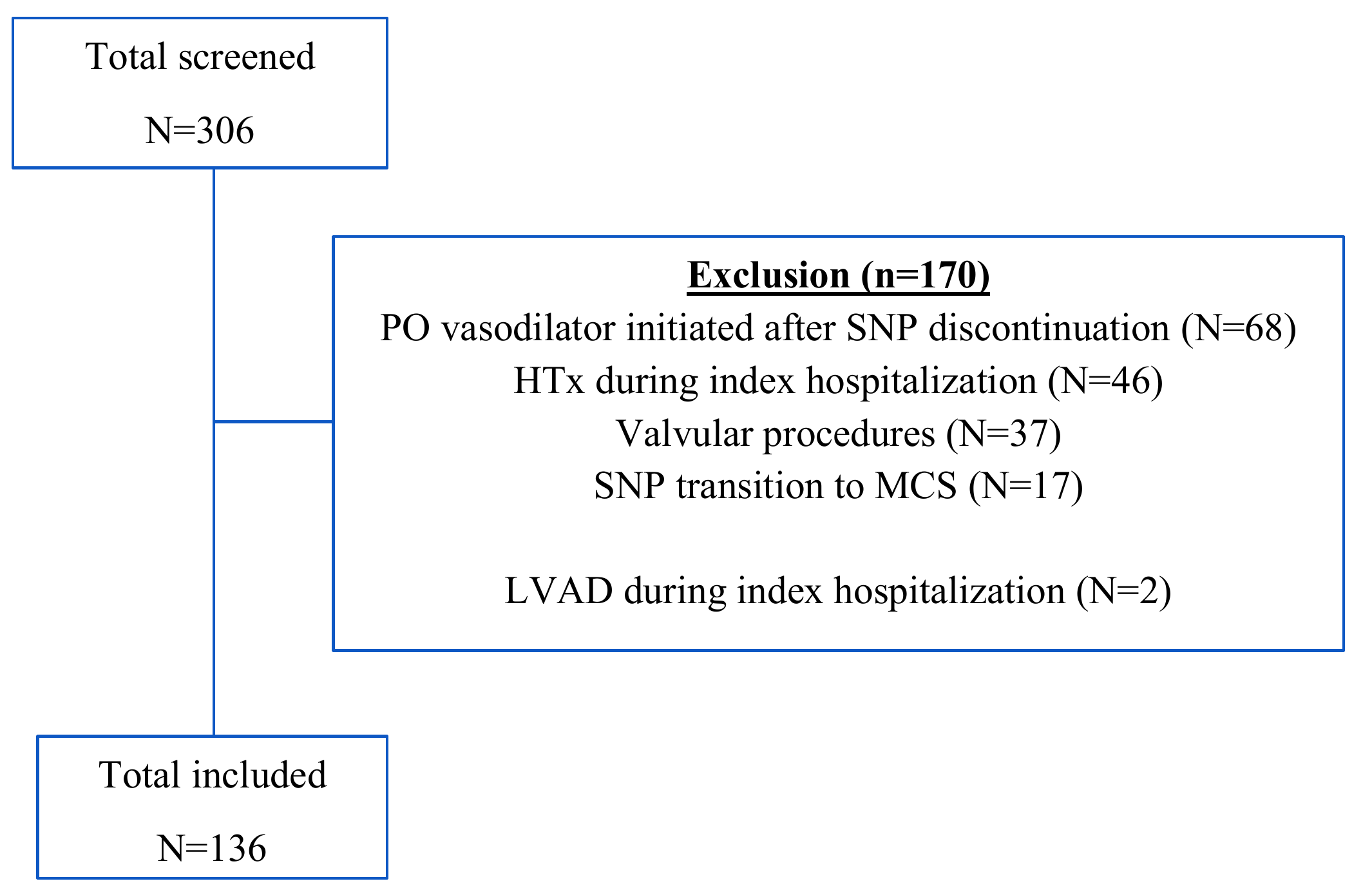
A total of 306 patients were screened between January 1st, 2018, and April 1st, 2024, of whom 136 met the inclusion criteria. The most common reason for exclusion was undergoing heart transplantation during the index hospitalization. Additional reasons for exclusion are detailed in Figure 1.

The mean age was 58.8 ± 14.0 years old and 80.1% were male. The baseline ejection fraction was 25.7% in both groups. Baseline serum creatinine (SCr) and potassium (K) were significantly higher in the protocolized dosing group than in the provider-directed dosing group (SCr 1.7 vs 1.4 mg/dL; p = 0.02 and K 4.4 vs 4.0 mEq/L; p = 0.02). The protocolized group included 42 (31%) patients, with 33 patients (78.6%) receiving H-ISDN. In the provider-directed dosing group, the two most common agents utilized were H-ISDN (26.6%) followed by an ARB (23.4%). Patients who were on PO vasodilators prior to SNP were more likely to receive provider-directed dosing PO vasodilator strategy than a protocolized approach (24.5% vs 2.4%, p = 0.001) (Table 2). Differences in baseline demographics between the two protocolized titration order sets are shown in Supplemental Table 1.
| Protocolized group (N = 42) | Provider directed dosing (N = 94) | p-value | |
|---|---|---|---|
| Age, years | 59.1 ± 14.1 | 58.7 ± 14.1 | 0.88 |
| Rapid titration order set | -- | ||
| H-ISDN | 33 (78.6) | NA | |
| Captopril | 9 (21.4) | ||
| Provider directed dosing | -- | ||
| H-ISDN | NA | 25 (26.6) | |
| ARB | 22 (23.4) | ||
| ARNi | 14 (14.9) | ||
| Hydralazine monotherapy | 11 (11.7) | ||
| ACEi | 10 (10.6) | ||
| Other | 12 (12.8) | ||
| Female | 9 (21.4) | 18 (19.1) | 0.76 |
| BMI, kg/m2 | 29.4 ± 8.2 | 30.8 ± 6.8 | 0.33 |
| Race | 0.79 | ||
| Black or AA | 10 (23.8) | 29 (30.9) | |
| White or Caucasian | 29 (69.0) | 58 (61.7) | |
| Other^ | 3 (7.1) | 7 (7.4) | |
| LVEF, % | 25.7 ± 15.5 | 25.7 ± 15.8 | 0.99 |
| SCr, mg/dL | 1.7 ± 0.9 | 1.4 ± 0.6 | 0.02 |
| Potassium, mEq/L | 4.4 [4.0 - 4.5] | 4.0 [3.8 - 4.4] | 0.02 |
| Sodium, mEq/L | 136.5 [133 – 139] | 137.0 [134 – 139] | 0.35 |
| BNP, pg/mL | 1110 [781 – 2890] | 790 [383 – 1470] | 0.14 |
| Missing data | 27 (64.3) | 53 (56.4) | |
| NTproBNP, pg/mL | 6980 [3940 – 19400] | 5465 [2650 – 12700] | 0.34 |
| Missing data | 31 (73.8) | 68 (72.3) | |
| Hypertension | 26 (61.9) | 60 (63.8) | 0.83 |
| Chronic kidney disease | 22 (52.4) | 43 (45.7) | 0.47 |
| History of stroke | 2 (4.8) | 5 (5.3) | 1.0 |
| Atrial fibrillation | 25 (59.5) | 45 (47.9) | 0.21 |
| Admission SBP, mmHg | 115.4 ± 20.1 | 120.8 ± 20.7 | 0.16 |
| Admission DBP, mmHg | 76.9 ± 15.3 | 77.2 ± 16.6 | 0.91 |
| PTA cardiovascular medications | |||
| ACEi/ARB | 1 (2.4) | 12 (12.8) | 0.06 |
| ARNi | 3 (7.1) | 9 (9.6) | 0.75 |
| Beta blockers | 10 (23.8) | 30 (31.9) | 0.34 |
| MRA | 7 (16.7) | 19 (20.2) | 0.63 |
| SGLT2i | 3 (7.1) | 17 (18.1) | 0.10 |
| Hydralazine | 2 (4.8) | 7 (7.4) | 0.72 |
| Nitrates | 2 (4.8) | 4 (4.3) | 1.0 |
| PO vasodilator prior to SNP infusion during hospitalization | 1 (2.4) | 23 (24.5) | 0.001 |
| Inotropes prior to admission | 1 (2.4) | 7 (7.4) | 0.434 |
| Inotropes while on SNP | 0.927 | ||
| Yes | 17 (40.5) | 35 (37.2) | |
| No | 25 (59.5) | 59 (62.8) | |
| Specific inotropes among patients receiving inotropes* | 1.000 | ||
| Milrinone | 14 (82.4) | 30 (85.7) | |
| Dobutamine | 2 (11.8) | 3 (8.6) | |
| Both | 1 (5.9) | 2 (5.7) | |
| Hemodynamics at SNP start | |||
| CVP | 14.0 ± 8.3 | 14.1 ± 7.4 | 0.94 |
| sPAP | 53.5 ± 14.0 | 54.5 ± 17.9 | 0.75 |
| dPAP | 26.6 ± 7.7 | 26.1 ± 9.7 | 0.76 |
| SVR | 1779.3 ± 708.4 | 1841.8 ± 741.3 | 0.69 |
| PCWP | 24.4 ± 7.9 | 25.0 ± 9.4 | 0.78 |
| CI | 1.8 ± 0.5 | 1.8 ± 0.6 | 0.87 |
| SNP dose at time of PO vasodilator start, mcg/kg/min | 1.4 ± 1.0 | 1.2 ± 0.9 | 0.209 |
Data presented as mean ± standard deviation, median [IQR] or n (%). *Percentages calculated among patients who received inotropes. ^ Other races includes: American Indian or Alaska Native, Other or Unknown. AA, African American; ACEi, angiotensin converting enzyme inhibitors; ARB, angiotensin receptor blockers; ARNi, angiotensin receptor/neprilysin inhibitor; BMI, body mass index; BNP, B-type natriuretic peptide; CI, cardiac index, in L/min/m2; CVP, central venous pressure, in mmHg; DBP, diastolic blood pressure, in mmHg; dPAP, diastolic pulmonary artery pressure; H-ISDN, hydralazine-isosorbide dinitrate; LVEF, left ventricular ejection fraction; MRA, mineralocorticoid receptor antagonist; NTproBNP, N-terminal pro B-type natriuretic peptide; PAP, pulmonary artery pressure, in mmHg; PCWP, pulmonary capillary wedge pressure, in mmHg; PO, oral; PTA, prior to admission; SBP, systolic blood pressure, in mmHg; SCr, serum creatinine; SGLT2i, sodium-glucose cotransporter-2 inhibitors; SNP, sodium nitroprusside; sPAP, systolic pulmonary artery pressure; SVR, systemic vascular resistance, in dynes-sec/cm5.
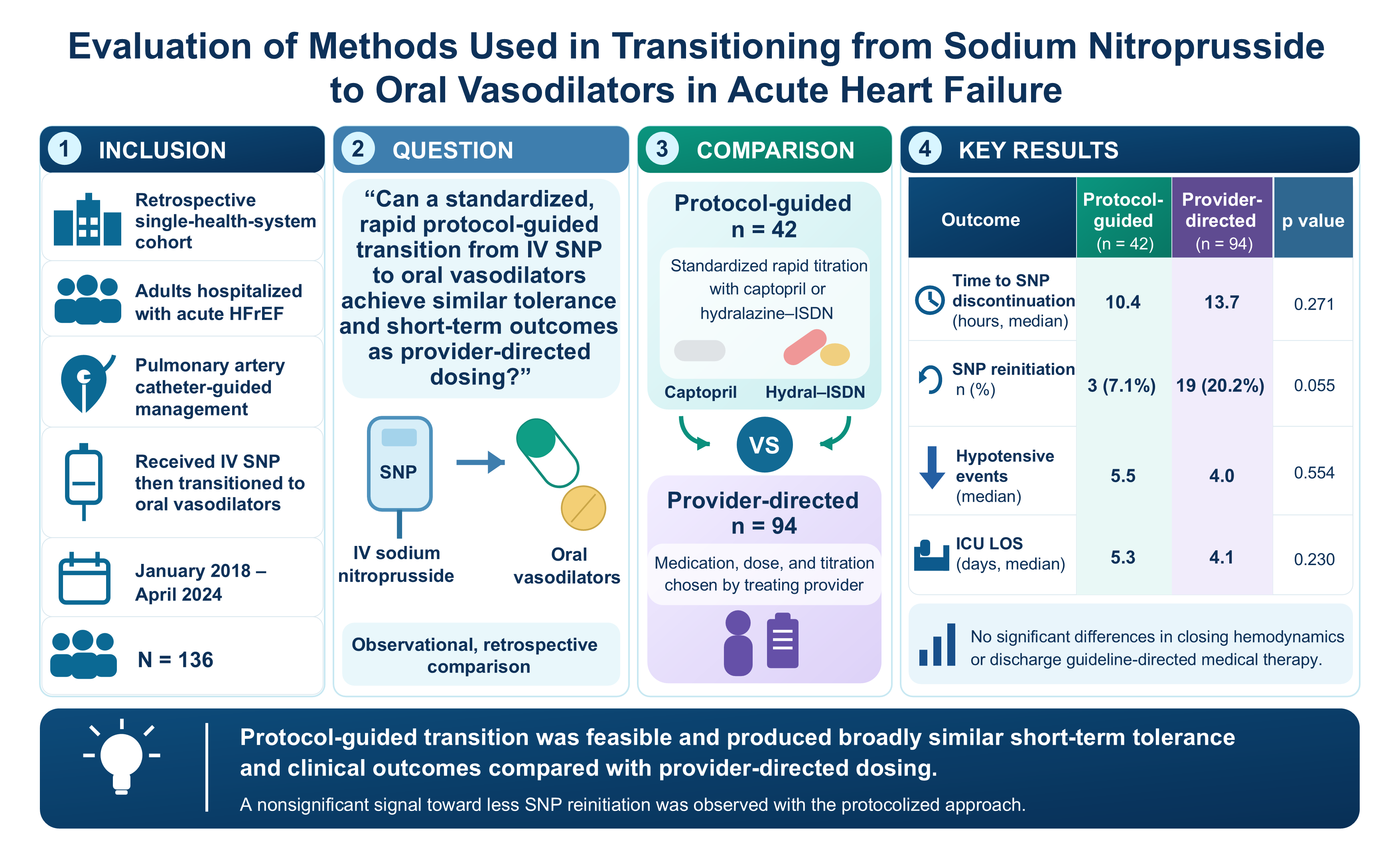
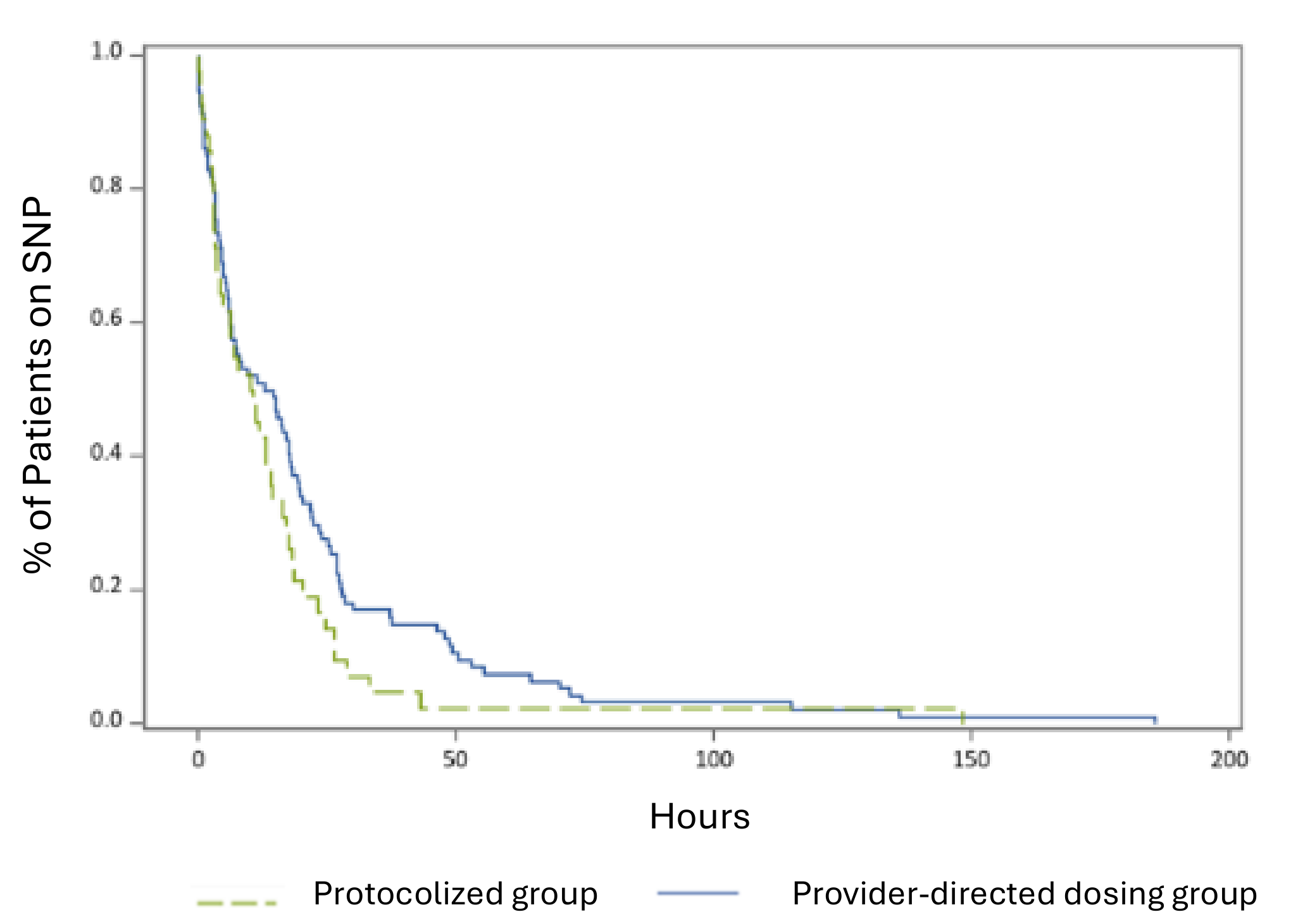
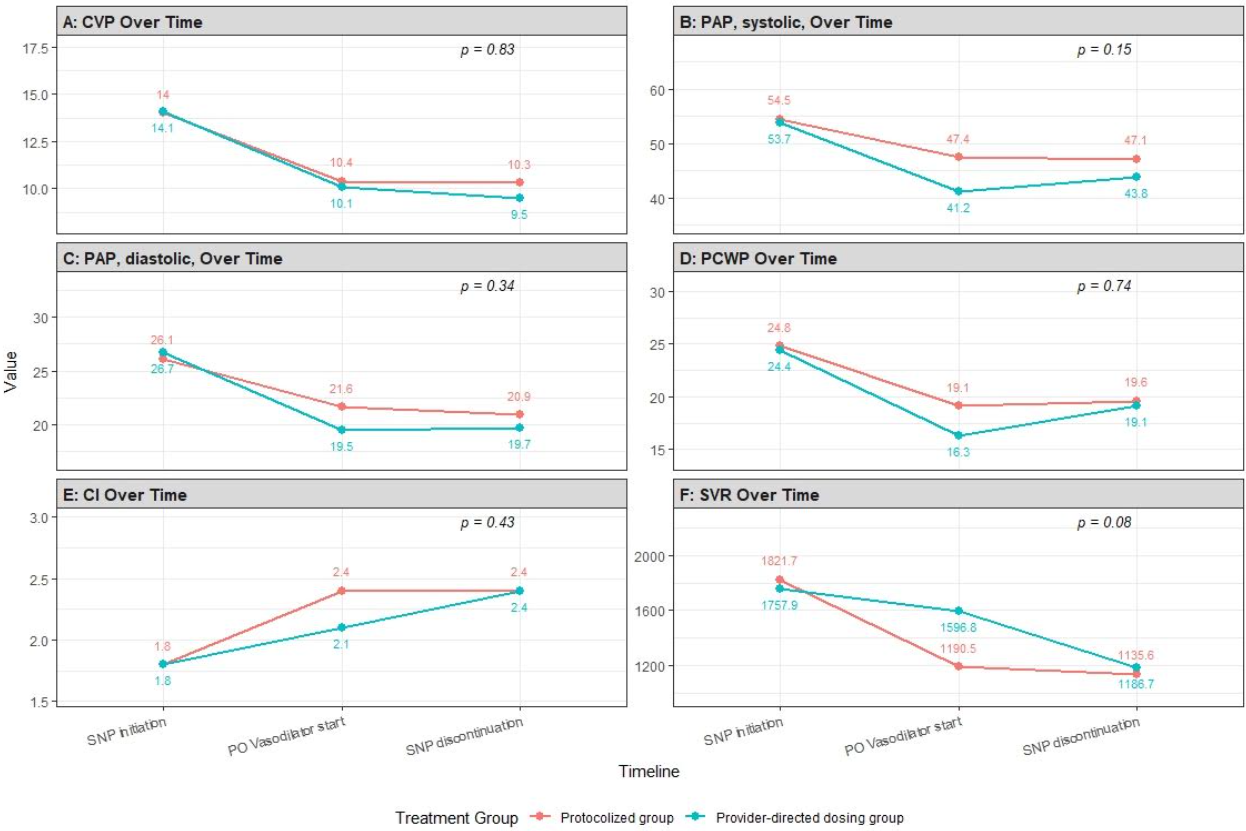
Data comparisons are reported as protocolized group vs provider-directed dosing group. There was no statistical difference in the primary outcome of time to SNP discontinuation after PO vasodilator initiation [median 10.4 hours vs 13.7 hours, Risk Difference 2.3 (95% confidence interval (CI) -4.61 – 9.21); p = 0.271] (Table 3 and Figure 2). Additionally, there were no significant differences in SNP reinitiation rates, although there was a trend toward less need for reinitiation in the protocol-guided group (7.1% vs 20.2%, Odds Ratio 0.3 (95% CI 0.08 – 1.10); p = 0.055). No significant differences between groups were seen in the number of hypotensive events (median 5.5 vs 4.0, p = 0.554), ICU length of stay (median 5.3 days vs 4.1 days, p = 0.230), all-cause mortality occurring during index hospitalization or within 7 days of discharge (11.9% vs 6.4%, p = 0.314), or the number of patients discharged on inotrope (9.5% vs 16.0%, p = 0.317). Closing CI (2.4 ± 0.6 L/min/m2 vs 2.3 ± 0.8 L/min/m2), SVR (1208.2 ± 331.4 dynes-sec/cm-5 vs 1167.2 ± 498.6 dynes-sec/cm-5), sPAP (43.8 ± 14.4 mmHg vs 46.6 ± 15.1 mmHg) and dPAP (19.7 ± 8.3 mmHg vs 20.8 ± 7.2 mmHg) were not significantly different at SNP discontinuation (Table 3 and Figure 3), with the exception of sPAP at time of PO vasodilator start which was statistically higher in the provider-directed group and SVR at time of PO vasodilator start which was statistically higher in the protocolized group.
| Protocolized group (N = 42) | Provider directed dosing (N = 94) | p-value | |
|---|---|---|---|
| Time to SNP discontinuation after PO vasodilator start, hr | 10.4 [3.1-18.1] | 13.7 [3.4-26.9] | 0.271 |
| SNP reinitiation | 3 (7.1) | 19 (20.2) | 0.055 |
| Number of hypotensive events | 5.5 [0-16] | 4.0 [0-12] | 0.554 |
| PAC numbers at: | |||
| PO vasodilator start | |||
| CVP | 10.3 ± 6.4 | 10.4 ± 6.2 | 0.931 |
| sPAP | 41.2 ± 12.7 | 47.3 ± 16.5 | 0.037 |
| dPAP | 19.5 ± 6.7 | 21.6 ± 7.5 | 0.132 |
| PCWP | 15.7 ± 6.6 | 19.6 ± 7.1 | 0.195 |
| SVR | 1666.4 ± 648.6 | 1193.9 ± 432.4 | 0.022 |
| CI | 2.0 ± 0.4 | 2.4 ± 0.7 | 0.208 |
| SNP discontinuation | |||
| CVP | 9.8 ± 5.9 | 10.4 ± 6.2 | 0.596 |
| sPAP | 43.8 ± 14.4 | 46.6 ± 15.1 | 0.323 |
| dPAP | 19.7 ± 8.3 | 20.8 ± 7.2 | 0.410 |
| PCWP | 18.8 ± 7.1 | 19.8 ± 7.2 | 0.571 |
| SVR | 1208.2 ± 331.4 | 1167.2 ± 498.6 | 0.715 |
| CI | 2.4 ± 0.6 | 2.3 ± 0.8 | 0.729 |
| ICU LOS, days | 5.3 [2.9-6.5] | 4.1 [2.5-6.3] | 0.230 |
| Mortality# | 5 (11.9) | 6 (6.4) | 0.314 |
| Discharge GDMT | |||
| ACEi/ARB | 11 (26.2) | 32 (34.0) | 0.362 |
| ARNi | 8 (19.0) | 26 (27.7) | 0.283 |
| ACEi/ARB/ARNi | 19 (45.2) | 58 (61.7) | 0.073 |
| BB | 23 (54.8) | 49 (52.1) | 0.776 |
| MRA | 12 (28.6) | 34 (36.2) | 0.386 |
| Other discharge GDMT | |||
| SGLT2i | 7 (16.7) | 22 (23.4) | 0.375 |
| Hydralazine | 17 (40.5) | 26 (27.7) | 0.137 |
| Nitrates | 16 (38.1) | 26 (27.7) | 0.223 |
| Inotropes at discharge | 4 (9.5) | 15 (16.0) | 0.317 |
Data presented as median [IQR], n (%), or mean ± SD. #Mortality included in hospital or within 7 days of discharge. Discharge GDMT defined as the 3 foundational pillars of beta-blocker, ACEi/ARB/ARNi, and MRA. Other discharge GDMT includes SGLT2i, hydralazine, and nitrates. ACEi, angiotensin converting enzyme inhibitors; ARB, angiotensin receptor blockers; ARNi, angiotensin receptor/neprilysin inhibitor; BB, beta blocker; CI, cardiac index; CVP, central venous pressure; dPAP, diastolic pulmonary artery pressure; GDMT, guideline-directed medical therapy; ICU, intensive care unit; LOS, length of stay; MRA, mineralocorticoid receptor antagonist; PAC, pulmonary artery catheter; PCWP, pulmonary capillary wedge pressure; PO, oral; SGLT2i, sodium-glucose cotransporter-2 inhibitors; SNP, sodium nitroprusside; sPAP, systolic pulmonary artery pressure; SVR, systemic vascular resistance.


At hospital discharge, prescribing rates for each class of GDMT increased compared to admission. Numerically, patients in the provider-directed dosing group were more likely to be discharged on a RAASi, MRA, and SGLT2i (Table 3), but this was not statistically significant. Patients in the protocolized group were numerically more often discharged on hydralazine and nitrates. In the protocolized group, 45.2% were discharged on a RAASi compared to 40.5% on hydralazine and 38.1% on nitrates, while in the provider-directed dosing group, 61.7% were discharged on a RAASi and 27.7% on each of hydralazine and nitrates. Because rates of non-vasodilator GDMT (beta blockers, MRA, SGLT2i) are determined largely by treating provider discretion and are not directly dictated by the PO vasodilator transition strategy, these findings are best interpreted as descriptive observations. Despite differences in the specific agents prescribed, the overall number of GDMT classes at discharge appeared similar between groups. However, only a small proportion of patients in either group were discharged on all foundational pillars of GDMT (9.5% vs 8.5%). Median doses of GDMT at discharge are shown in Supplemental Table 4. The median dose of ACEi (expressed in enalapril equivalents) was 15 mg versus 18.7 mg; ARB (expressed in enalapril equivalents) was 9.8 mg versus 9.2 mg; hydralazine was 77.5 mg versus 76.5 mg; and nitrates was 28.7 mg versus 32.2 mg in the protocolized group versus provider directed dosing group, respectively.
Discussion
In this descriptive comparison of real-world transition practices from SNP, we observed no significant differences in short-term clinical efficacy or safety between patients transitioned to PO vasodilators with protocolized versus provider-directed dosing strategies. To our knowledge, this study is the first to describe the safety and tolerability of a protocolized approach versus provider-directed approach when transitioning from SNP to PO vasodilators.
Two prior studies have evaluated the utility of a protocolized, rapid PO vasodilator titration strategy to facilitate transition off SNP, which served as the basis for our institution’s protocol. Verbrugge et al. assessed the hemodynamic effects of rapid titration with H-ISDN during SNP weaning, comparing outcomes to those in patients not transitioned to H-ISDN.5 In that study, patients receiving the H-ISDN protocol were more likely to experience hypotensive events, often necessitating dose reductions or discontinuation prior to discharge. In contrast, we did not observe significant differences in the incidence of hypotension between PO vasodilator strategies. This discrepancy may be attributable to differences in protocol design and dosing. Specifically, our order set allowed maximum H-ISDN doses of 300 mg-120 mg/day compared to 400 mg-180 mg/day. Our average total daily doses at discharge were approximately 75 mg/day for hydralazine and 30 mg ISDN compared to 200 mg/day hydralazine and 160 mg/day ISDN reported by Verbrugge et al. Amar et al. compared two protocolized regimens, specifically H-ISDN and captopril, on short-term outcomes and GDMT prescribing at discharge.4 They identified that fewer patients were discharged on ACEi/ARB in the H-ISDN protocol compared to captopril despite similar kidney function at time of discharge. Although in our study we did not identify a difference between groups, our ACEi/ARB/ARNi rates at discharge were lower than Amar et al. ACEi/ARB rates (~56% vs ~75%). We also were able to broaden the scope by evaluating other GDMT rates and average doses per day at discharge between the two cohorts and found no statistical significance. The median duration of SNP infusion after PO vasodilator initiation in our study, 10-13 hours, was significantly shorter than reported in previous studies. The shorter duration may reflect practice variations in the initiation of PO vasodilators relative to IV vasodilators and the SNP dose at the time of transition, with potential implications for both the timing and tolerability of PO vasodilators. Comparing the average PO vasodilator dose at SNP discontinuation with discharge GDMT, the total daily doses of both hydralazine and nitrates were substantially reduced. In contrast, enalapril equivalents of RAASi and initiation of sacubitril/valsartan increased. This pattern suggests a transition in both groups from short-acting vasodilators to higher-evidence RAAS inhibitors, representing an important pillar of GDMT.
Our study offers novel insight into the transition from SNP to sacubitril/valsartan in patients with AHF. While sacubitril/valsartan is strongly recommended by current guidelines for reducing mortality and morbidity, data on its use in the ICU setting remain limited. Martyn et al. investigated this approach in a small cohort of 25 patients, demonstrating successful weaning from SNP and hemodynamic tolerability, suggesting that ICU initiation may be safe.8 However, another case series of 15 patients demonstrated a high incidence of hypotension when sacubitril/valsartan was used to wean from SNP, with hypotension being more common in those with lower ejection fractions and higher serum creatinine.9 Importantly, there was no assessment of volume status at time of sacubitril/valsartan initiation, which may have affected tolerability. These findings highlight the need for future studies evaluating the safety and tolerability of sacubitril/valsartan initiation in critically ill patients. Notably, the PCWP, a surrogate marker for volume status and left-sided filling pressure,6 was numerically closer to goal at the time of PO vasodilator initiation in the protocolized group and had significantly higher SVR than the provider-directed dosing group during this time point, which may have contributed to a smoother transition.
Our population consisted predominantly of patients with severely reduced ejection fraction (EF <25%) and low cardiac output at baseline, with low CI and elevated SVR. Their severity of illness is reflected in the 8.1% mortality rate (11 of 136 patients) occurring during hospitalization or within 7 days of discharge. Notably, mortality was numerically nearly twice as high in the protocolized group compared to the provider-directed group (11.9% vs 6.4%), though it is likely confounded by higher baseline serum creatinine, greater burden of CKD, and elevated baseline natriuretic peptides and was not statistically significant. The provider-directed dosing group had more patients on PO vasodilators prior to SNP initiation, which likely impacted transition method decisions. Providers tended to use the protocolized titration strategy when electing to transition patients to H-ISDN, frequently in the setting of CKD, whereas transitions to RAASi generally relied on provider-directed dosing titration strategy. Thus, the comparison is inherently confounded by both dosing strategy and drug choice.
Although more patients in the provider-directed dosing group were discharged on an RAASi, MRA, and SGLT2i, the total number of GDMT agents prescribed at discharge was comparable between groups. However, a 16.5 percentage-point absolute difference in RAASi prescribing at discharge is potentially clinically meaningful, given the established mortality benefit of RAASi therapy in HFrEF, and may be related to the transition strategy chosen. Additionally, aggressive GDMT initiation following AHF was not widely adopted until the publication of the STRONG-HF trial in 2022, which expanded support for inpatient GDMT optimization.7 Importantly, discharge prescribing of every GDMT class increased compared to admission, although the overall proportion of patients discharged on all four pillars of GDMT remained low. The mean doses between the different GDMT agents were similar between the two groups.
The limited use of the protocolized approach, particularly the captopril-based regimen compared to H-ISDN, may reflect provider preferences influenced by clinical experience, comfort with specific agents, renal function, hyperkalemia risk, or a desire to transition patients to sacubitril/valsartan. At our institution, the use of ACEi has declined with the increasing adoption of ARNis, leading to greater reliance on ARBs as a bridge. As treatment decisions were made at the discretion of the treating provider, and patients were not randomized to either titration strategy, no definitive conclusions can be drawn regarding the superiority of one approach. However, our findings suggest that either transition strategy may be reasonable in clinical practice. The existing protocolized dosing strategies (captopril and H-ISDN) reflect historical practice patterns and do not address contemporary goals of initiating patients on ARNi therapy. Both approaches have inherent limitations in facilitating optimal GDMT initiation following AHF.
Study limitations
Several limitations should be noted. First, the small sample size precluded cohort matching, thereby limiting the ability to adjust for baseline differences. Readmission rates were not collected, preventing assessment of longer-term outcomes. The study was underpowered to detect statistically significant differences in clinical outcomes, and therefore results should be interpreted as hypothesis-generating and a description of real-world transition practices. In the provider-directed dosing group, the choice of PO vasodilators was based entirely on provider discretion, which may introduce bias and limit reproducibility. In the protocolized group, patients were identified based on a specific order set identifier; however, providers retained the option to prescribe only one agent (either isosorbide dinitrate or hydralazine), despite the protocol being designed for both agents to be used concomitantly. For the purposes of this analysis, we assumed both agents were used when the order set was selected, which may overestimate actual dual-agent utilization. Additionally, several variables that may further characterize transition tolerability and success were not collected and represent gaps in this analysis. Concomitant IV diuretic strategy and net fluid balance at the time of transition were not captured, though ventricular filling pressures (CVP and PCWP), valid markers of volume status, were similar between groups throughout the transition period. Concurrent beta-blocker initiation or uptitration may have affected tolerability, but incidence of beta-blocker use during the transition period is expected to be low given the number of patients with low baseline cardiac index. Renal function changes during and after transition were not captured and may have influenced discharge GDMT rates. Finally, we were unable to fully account for the confounding effect of PO vasodilators used prior to SNP initiation, which were more common in the provider-directed group (24.5% vs 2.4%) and may have influenced both transition strategy selection and outcomes.
Conclusions
There was no significant difference in short-term outcomes, clinical efficacy, or safety between patients transitioning to PO vasodilators using a protocolized versus provider-directed titration strategy. However, given that treatment strategy was confounded by drug class and patient selection, this study is best interpreted as a descriptive comparison of real-world transition practices rather than a controlled efficacy comparison. Rates of foundational three-pillar GDMT prescription at time of discharge were similar in both cohorts and increased compared to admission, although RAASi use at discharge was numerically higher with provider-directed dosing. The low utilization of rapid titration protocols highlights real-world challenges in standardizing vasodilator strategies. In addition, further analysis is warranted to identify patient-specific baseline characteristics that may predict tolerance to a more aggressive PO transition regimen.